Friday, October 2, 2020

Our 19th Great-grandfather: Sir Nigel Loring KG (c1320-1386) and the Black Prince

 Sir Neel/Nigel Loring, KG (c1320-1386), wearing his garter robes over a tunic showing his arms. From the 1430 Bruges Garter Book made by William Bruges (1375–1450). Sir Nigel was likely bearded with long hair, but when the illustration was made the style was clean-shaven.
 

I once said to my book group, "We Americans are all descended from peasants." A member countered that she was descended from a noble family of Luxembourg. "All right," I conceded, "but the rest of your ancestors were probably peasants." She agreed that might be so. I believed this until, with a better understanding of 17th century immigration to Virginia and Maryland - those younger sons of aristocratic families fallen on hard times, seeking to make tobacco fortunes in the New World - I discovered that some individuals in our pedigree appear in recorded history.

In my previous blog I gave the lineage from William Rainey, our 6th great-grandfather, up to our 13th great-grandparents, Joan Acworth and Edward Waldegrave and their travails in Tudor times.  HERE

King Edward III's tomb, likely how he appeared in life.


Generations earlier, during the reign of King Edward III (1312-1377), our ancestor, Sir Nigel Loring (c1320-1386), was famous in his lifetime as a courageous soldier during the Hundred Years War, loyal bodyguard in battle and household chamberlain in peace to the king's son, Edward, Prince of Wales, later called the Black Prince. I'm grateful to our very distant English cousin, Sue Valiant, who shares Joan Acworth's father, George Acworth (1478-1530), as our common ancestor (as well as Sir Nigel). She's permitted me to quote from her 50 page biography, titled  Sir Nigel Loring, His Life and Times, that she posted on Ancestry. Her passages are in italics.

The lineage beyond George Acworth (1478-1530), our 14th great-grandfather, is through George's mother, Elizabeth Broughton (c1450 - c1515), her father Sir John Broughton (c1407 - c1489), his mother, Mary Pever (c1375 - c1409), and her mother, Margaret Loring (c1355 - c1424). Margaret and her older sister Isabel were Sir Nigel Loring's surviving children and his heirs. The Loring family had been in possession of the Manor of Chalgrave, Bedfordshire, since Albert of Lorraine became court chaplain to William the Conqueror and appeared in the Domesday Book of 1086 in possession of Chalgrave and nearby lands. Apparently, Albert, a Norman, had been chaplain to Edward the Confessor, son of Emma of Normandy, during his kingship, and simply passed his allegiance to his kinsman, William,  upon the defeat of Harold at Hastings. Priests could marry until the Church forbade it in 1139.

County Bedfordshire, England
  

Sir Nigel (sometime Neel) Loring (c1320-1386) is our 19th great-grandfather.  Hard to wrap your mind around this, I know. He spoke Anglo-Norman, French, and probably a soldier's English. 

In the 14th century people lived closer to heaven than to earth, faith was strong, life difficult, eyes ever lifted Godward. Wars were blessed as righteous. Civilians, men, women and children, might be hacked to death after a French town fell to warn towns farther on not to resist the might of King Edward of England, but such slaughter was not a sin. Chivalry was not what we imagine. In wartime human life had no value except for ransom to fill the coffers of the king and to enrich his armies as he fought for the throne of France, claimed through his mother Isabelle. Sir Nigel Loring believed with a simple and steadfast heart that his military prowess in the name of King Edward and Prince Edward was righteous and godly. He became one of the great knights of the realm. The 14th century has been called a 'distant mirror' of our own times. You decide.

The years of Nigel’s early life would have been difficult for his father, [Sir] Roger, as this was when Roger Mortimer and Queen Isabella overthrew Edward II and took power for themselves in the name of Isabella’s son Edward. On 21st January 1327 Edward II was forced to abdicate and Edward III became King. Roger Loring would have had to choose sides during the turbulent years at the end of the reign of Edward II. . . In October 1330 when Edward III was strong enough to turn on Mortimer, . . . Roger Loring successfully chose the winning side and was in a position to place his son Nigel Loring in the household of Edward III.

At about age eight, Nigel would have been placed in the household of another knight to learn a knight's craft. By 1335, at fifteen, he was still in training in the royal household. In 1340, his training complete, he was chosen to accompany Edward III on his Flanders campaign. A large French fleet stopped the English fleet at the mouth of the River Zwin and the Battle of Sluys ensued on 24 June.

A miniature of the Battle of Sluys from Jean Froissart's Chronicles, 15th century


The smaller English boats used grappling hooks, long bows, and hand-to-hand fighting to defeat and destroy the French fleet, ensuring future battles would occur on the continent. The king was 28 and Nigel about 20. After the battle the king knighted Nigel for bravery and granted him
£20 per year to maintain his estate of knighthood. Through the years Nigel would have difficulty receiving full payment. A king might possess wealth in lands, but gold and silver were often scarce.

The new knight had to establish himself and acquire all the equipment he needed. Knighthood was expensive. Nigel had very little money of his own at this stage so might have had to ask for parental help until the money promised by the king was paid. Armour and special horses were a basic expense. A knight used a comfortable palfrey for riding and training and only mounted his war horse (destrier) when he was about to fight. Then there was the cost of tournaments and the special armour and weapons needed for them. A knight was expected to follow an affluent lifestyle especially if he was in the household of the King or the Prince of Wales. Whilst he was in the royal household his food and lodgings might be found but when on government work attending courts and on diplomatic missions then expenses had to be paid out of the knightly pocket and reimbursed if and when possible. He would need to employ pages, squires, grooms and body servants to look after himself, his armour and his horses. His squires would also need horses, usually hackneys, and his equipment had to be carried on pack horses or on a wagon. As a knight he had the right to bear arms and the arms of Nigel Loring were Quarterly argent [silver] and gules [red] a bend engrailed [edge of concave curves] sable [black]. 


Sir Nigel Loring's coat of arms, likely already held by the family for a few generations.


A joust
 

In February, 1342, 250 helmeted knights assembled for the tournament at Dunstable near Nigel's home, a place where tournaments had been held for about two hundred years. With much pageantry, parading and preliminary jousting, the main event, the great mêlée, in which two armies attempted to unseat and capture opponents for ransom and horses, did not begin until the sun was going down, leaving little time for ransoms to be won or lost. It's believed to have been the last mêlée-tournament held in England. Nigel's grandfathers and his father Roger had participated in earlier tournament mêlées.

A tournament mêlée in 1300


Nigel fought in Brittany in 1342 when King Edward and King Philip IV of France backed rival claimants for the Duchy of Brittany.

Brittany, France
 

It was the dispute over whether Gascony belonged to the English king or to the French king that began the Hundred Years' War. In October 1344 Nigel was a member of a group of Edward III's personal friends sent to negotiate with nobles in Gascony regarding their allegiance prior to Edward's deciding whether to deploy military forces. 

Gascony, a Basque area
 

Edward III's possession of Aquitaine was also weakening and Nigel served under the command of Henry Grosmont, Earl of Derby (later  Duke of Lancaster), sent in the king's name to take command of Aquitaine.

Henry Grosmont, Earl of Derby, later Duke of Lancaster, in his Garter robes

Modern Aquitaine in France

At the age of 25 Nigel was sent on his first recorded diplomatic mission as envoy to the Papal Court at Avignon to report to the Pope about the peace negotiations in Gascony. The new pope, Clement VI, was a Frenchman who had served King Philip as Chancellor. Clement was pro French and anti English in the dispute between the two Kings.
Papal Court at Avignon

Pope Clement, aware that Edward III was preparing for war, wrote to King Edward of his irritation that the Earl of Derby had refused to come himself, but asked the king to prolong the truce for a year.


On the same day the Pope wrote to Henry, earl of Derby in Gascony. ‘The pope has heard, by Nigel de Loring, knight, that which makes him grieve the more at the non-arrival of the earl, to whom he was ready to concede whatever should make for peace.’ This shows that Nigel spoke to the Pope in person. Six days later on 26 April 1345, the Pope was writing to King Philip of France passing on secret information gleaned from the English delegation. . . .


It is interesting to note that Nigel used the occasion of his official visit to make a personal petition to the pope on behalf of his younger brother John Loring [a cleric]. ‘Nigel Loring, knight of the earl of Derby, sometime the king's ambassador to the pope. Whereas, on behalf of his brother, John Loring, of the diocese of Lincoln, a petition was made for a benefice in the gift of the abbot and convent of Ramesey, value 100l, notwithstanding that he was in his seventeenth year, which was granted for a benefice, without cure of souls, to the value of 30 marks; and as the said grant is useless, the pope is prayed to grant a dispensation to the said John to hold benefices. Granted to the amount of 50 marks with cure of souls, 30 without, Dated as above 28th July 1345.[citation omitted]

As the war began in France in 1345, Nigel contracted to fight for Henry Grosmont, Earl of Derby. In a knight's contract, called an 'indenture', was a valuation for his warhorse, with a promise of recompense should the horse be lost in battle.

A knight's most valuable possession, his destrier.
 

Over his armour every knight wore a [cloth] coat of arms with his blazon on it. This identified him when he was fully armoured and unrecognizable by friend and foe. The coat of arms allowed a knight to decide which enemy knight to fight with the object not of killing him but of taking him prisoner and ransoming him. After skirmishes and battles there was a market where prisoners were bought, sold and exchanged. Selling his prisoner gave a knight more readily available money and no problems awaiting ransoms. Indentures provided for all ransoms more than £500 to be for the king, with compensation. Soldiers had to give a third of their prize money to their captain and he had to give a third of his gains to the king. Capturing prisoners and guarding them was a problem in the heat of battle and diminished the efficiency of the fighting unit. Such was the honour among knights that once captured their captor could ask them to leave the battle and not continue to fight and come back when the battle was over to arrange their ransom. The prisoner would usually hand over some part of his arms in pledge to his captor. Lesser men were killed outright.

The strongest English weapon was the chevauchée, raiding deep into France, killing, plundering and burning towns and villages, taking wealthy prisoners for ransom, forcing towns to submit to the English king to avoid destruction, thereby putting the French king to disadvantage because neither army really wanted a destructive battle. Only Church property was respected.


Sir Nigel fought in the division of Henry Grosmont, now Earl of Lancaster, in Gascony in 1346, providing 3 esquires and a hobelar - a lightly mounted infantryman. It's believed Nigel was at the siege of Calais when the city fell on 4 August 1347, after nearly a year of assaults. Edward, Prince of Wales, was also present.

Depiction of a French town under siege
 

In September 1347 a peace treaty was agreed, planned to last until 8 July 1348. It was to cover France, Scotland and Flanders. Edward and his knights returned home to England to celebrate their military successes with tournaments, hunting and spending their prize money. The nation was ecstatic. The news of the victories was announced from the pulpits and proclaimed at the market cross. It was said that no woman in England lacked for a new gown or jewellery as so much wealth was brought back from France. The joy did not last long as the pestilence came to England.

Depiction of burial of plague victims
 

We now call it the Black Death but at the time it was referred to as ‘the pestilence’. It arrived in Southampton in August 1348. In September the plague was in Dorset and by November it had reached London. In New Year 1349 the plague swept through south England killing around 40% of the population. By March the food supply had collapsed, law and order had broken down and the economy was suffering deflation. The chronicler Henry Knighton described it. ‘And there was a great cheapness of all things for fear of death, for very few took any account of riches or of possessions of any kind. A man could have a horse which was formerly worth forty shillings for half a mark (6s 8d), a big fat ox for four shillings, a cow for twelve pence, a heifer for sixpence, a fat wether for fourpence, a sheep for threepence, a lamb for tuppence, a large pig for fivepence and a stone of wool for ninepence. Sheep and oxen strayed through the fields and among the crops, and there was no one to drive them off or to collect them, but they perished in uncounted numbers throughout all districts for lack of shepherds, because there was such a shortage of servants and labourers.[citation omitted] To add to this there was cattle pestilence and heavy rain began to fall. Sheep and cattle died and crops failed. In January 1349 the king and his court went into the country and probably because they generally lived in more hygienic and airier conditions than the normal populace none of the knights of the garter died of the plague. About 25% of their contemporaries between the ages of 21-35 died. By autumn 1349 Henry Knighton tells us ‘no one could get a reaper for less than eightpence with food, or a mower for less than twelvepence with food. For this reason many crops perished in the fields for lack of harvesters’. In 1348 a ploughman earned about 2 shillings a week. By 1350 this had risen to 10 shillings. Landowners who did not have enough cash (rents could not be paid by dead tenants) had to sell off parts of their estates cheaply in order to avoid bankruptcy. All this affected Nigel as he looked to his manor of Chalgrave and started to buy more land.  


The royal court kept away from London and Edward III ruled by decree. The country was in economic meltdown but Edward went ahead with his plans to inaugurate the Order of the Garter which he did on 23 April 1349. Nigel is well documented as one of the first Knights of the Garter. He had the 10th stall on the Prince’s side. Nigel was 28 by this time and had been knighted only 8 years and yet he was picked as one of the original 26 Garter Knights.

Sir Nigel Loring as a founding member of the Knights of the Order of the Garter


The actual function of the order was almost exclusively religious. It was a serious and solemn foundation. Knights of the Garter had to celebrate mass for dead knights and assist in the maintenance of the college of canons at Windsor. Every time they passed through Windsor the KG had to hear mass at the chapel. They all had to be present at the St George’s day feast to hear mass unless they were absent by the king’s leave. If they were absent they were to celebrate the feast themselves as if they were at Windsor. One of the secular rules was that no KG was to be seen in public without his garter.[ Richard Barber, Edward Prince of Wales and Aquitaine, Boydell 1978] The Garter was an order of chivalry and something should be said of what chivalry meant in the fourteenth century. Its major components were loyalty and prowess. Prowess was noted from individual achievement on the battlefield or the tournament. It was the most esteemed of the qualities of a soldier. Prowess combined skill at arms with great daring. Prowess was honoured above generalship or strategy. Command was given to the most senior noble on campaign without regard to fitness for office and strategy was not a recognised military skill of the time. To be one of the original knights, Nigel must have convinced the king of both his loyalty and prowess.

In about 1348 Nigel, now a rich man, married Margaret Beauple, daughter of Sir Ralph Beauple of Knowstone in Devon and Elizabeth Bloyou, our 20th great-grandparents. They were large landowners and Margaret brought Beaworthy as her marriage jointure; in 1371 she inherited her father's other lands. Nigel served in France with Sir Ralph Beauple in 1355, so they might well have known each other on an earlier campaign. 

Knowstone is in north Devon.
 

In 1350 Nigel was sent on a diplomatic mission to the Low Countries. He was commissioned with others to treat with [King Edward's wife] Queen Philippa's sister, the Empress Margaret, concerning payments due to the king for the government of the Low Countries in Zealand, Holland and Friesland [citation omitted]. This was a responsible mission. He is authorised to negotiate with the Empress Margaret and her advisors about financial matters and tasked with getting the Empress to hand over monies owed to Edward III. 

Nigel entered the household of Edward, Prince of Wales, about 1350, and by1355 had become his chamberlain, one of the three highest household offices. 

Edward, Prince of Wales, in his Garter robes


The chamberlain was the closest personal servant to the prince. The post carried an immense amount of influence and responsibility and it was usually held by men who were close personal friends. The chamberlain had responsibility for the treasure and the jewels and for controlling both written and personal access to the prince. Petitions brought to the prince would normally have been endorsed by the chamberlain. He attended personally on the prince and vetted those who were either allowed to see the prince or turned away. It is fairly safe to assume that the prince trusted Nigel and that he liked him enough to have him with him during the most part of every day. He must also have trusted his judgement. He was part of the prince’s permanent staff. As chamberlain he would have been busy with all the coming and going and messengers between the prince’s commanders, the council in London and the king on campaign in Scotland. The pope also sent nuncios to the prince and his commanders to try to stop the campaign and the war. Nigel must have had a team of knights and squires he could use as messengers between all these people. 

 Nigel was about to accompany Edward, Prince of Wales, later called the Black Prince, perhaps because of his brutality to the French citizenry, on campaign in France. He was a member of the prince's war council while in England and again after landing in France in September 1355. In October the prince began a chevauchée into Aquitaine, during which he pillaged Avignonet and Castelnaudary, sacked Carcassonne, and plundered Narbonne. After 58 days, they headed for winter quarters.

Nigel spent the winter in Bordeaux with the prince. As his chamberlain and close friend, he was never given a military command because his purpose was to counsel the prince and to physically protect him, especially in battle. 

While in France, the prince allegedly lost his signet ring and used Nigel's to stamp wax seals on documents. In 1866 the prince's signet ring was discovered at Montpensier in the Auverne, which he had pillaged in 1356. It now rests in the Louvre. The ring is gold, originally enameled, set with a carved ruby.
Detail of carved ruby on the Black Prince's signet ring.

The next year, 1356, on another chevauchée, the prince ravaged the Auverne, Limousin, and Berry, but failed to take Bourges. He offered terms of peace to King Jean II of France, who had outflanked him near Poitiers, but refused to surrender himself as the price of their acceptance. This led to the Battle of Poitiers, in which the prince's  army routed the French and took King Jean prisoner. (After some ransom was paid and lands granted to Edward III, Jean was released in 1360 to raise more ransom, and his son Louis exchanged for him at Calais; learning his son had escaped Calais, King Jean voluntarily returned to captivity and died in England in 1364).

King Jean II of France, painted on board c. 1350 during his lifetime.
 

On the eve of the battle of Poitiers, Sir Nigel, two other knights, and two yeomen were chosen as the prince's personal bodyguard, likely because they were the best fighters to defend the heir to the throne. Because they were unable to capture their own prisoners for ransom, the prince doubtlessly handsomely rewarded Sir Nigel and the others. The Battle of Poitiers is still considered a great English victory HERE

Battle of Poitiers by Eugene Delacroix in 19th century


Nigel was sent at the end of October 1356 along with Sir Roger Cotesford to take a personal message from the prince to the king [citation omitted] and to give a full, personal report to the king as a trusted member of the prince’s household who was there with the prince and in the war council. Nigel also took a letter to the Mayor, Aldermen and people of London from the prince. The letter was copied into the letter books of the City and so its contents have survived.[citation omitted] The letter to the Mayor of London says that if he wants to know more he should ask Sir Nigel Loring who is described as our very dear and beloved knight. The mayor and aldermen were asked to give Nigel their trust in his word as he was speaking from his own knowledge. Nigel would also have been able to tell the king what the prince’s thoughts were for the next stage of the campaign. Instructions and communication of the views of the king and his council was equally important and Nigel and Cotesford would have brought these back with them when they returned to Bordeaux. Since Nigel was involved with the peace negotiation and had instructions from the king it is likely he returned as soon as a ship could take him, probably before Christmas.

The record of the award made to Nigel after the battle of Poitiers tells us that he was there and that he was one of the men in the prince’s personal bodyguard that day. ‘Our dear and well loved chamberlain Neel Loheryn in Gascony and in particular the battle of Poitiers where he was assigned to our body is granted £403 6s 8d’.[citation omitted] This was worth £238,000 in 2012.[citation omitted] 

The Prince of Wales returned to England with his armies, booty, and King Jean, to great celebration.  

It was probably about this time that the prince gave him the manor of Trematon in Cornwall for his lifetime. On Nigel’s death it reverted to the Duchy of Cornwall. . . Nigel was awarded a pension of £83 6s 8d per year. No previous expedition had brought back so many rich prisoners or so much wealth. 

In about 1359 Nigel rented a house in London so his wife Margaret and their two daughters could come to court. That same year the prince gave Nigel lands in Wales.

In 1359 King Edward again declared war on France, and Nigel accompanied the prince there in October. For seven months the King's armies pillaged, burned and foraged, but King Jean's son, the dauphin, refused to meet in battle. On May 10, 1360, Nigel was a witness to the Treaty of Brétigny, in which King Edward renounced his claim to the French throne in return for Aquitaine, about one-third of France, in full sovereignty, and the English returned home. Between November 1360 and October 1361, Nigel was one of the commissioners in the transference of towns, castles and lands in Aquitaine from the French to the English, and also to cause issues, rents, revenues and other emoluments thereof arising to be levied to the king's use, to take in his name oaths of fealty of nobles and others, to depute and establish justices, provosts, bailiffs and other ministers and officers. It called for being a good administrator and keeping meticulous records. Nigel was about 40 years old. He was still chamberlain to the Prince of Wales, and so must have spent more time in London than in Aquitaine, and managed his clerks and lawyers from there.

In 1363, the Prince of Wales and Aquitaine moved his court to Aquitaine. Nigel and his wife Margaret were a part of the court at Bordeaux until 1367. Those must have been heady days. In August 1363 the Prince petitioned Pope Urban V for a portable altar for his steward and for Nigel, his chamberlain, because they traveled so often about Aquitaine and could then hear mass privately.

‘Edward, prince of Aquitaine and Wales: On behalf of the steward of his household, Thomas de Felton, knight, and Joan his wife, for a portable altar. The same: For the like on behalf of his chamberlain, Nigel Loring, knight, and Margaret his wife. Granted for six years’


In 1362 Pedro, king of Castile had signed an Anglo Castilian alliance. . . The French were supporting Pedro’s brother Enrique who was his rival for the throne of Castile. The alliance only allowed the English to fight the French within Castile. In 1365 the French sent the ‘free companies’ that were causing havoc in France to fight the Moors in southern Spain. In fact the real motive for sending them to Spain was to help Enrique in Castile against his brother Pedro. King Pedro invoked the Anglo Castilian treaty in the autumn of 1365. It was too late and Enrique defeated his brother and was crowned king of Castile in the spring of 1366. King Pedro was in exile in Portugal by early June 1366. At the end of June he returned to Galicia, which was still holding out against Enrique and it was here that Nigel was sent as one of the prince’s ambassadors to discuss what King Pedro required. The prince then sent Nigel and three other knights to England to discuss the Spanish campaign with King Edward [citation omitted]. Nigel was able to spend about 6 months in England. . . .

 
He was only about 46 years of age but he had made a great deal of money which he had invested in new property. He started to enhance his manors by building parks at some of them. Permission to build a park was a reward from the king. It meant that Nigel was given permission to hunt on his own land. Technically he was given the right of ‘free warren’ which meant he had the right to keep a pack of hounds and hunt game (not deer or boar). This was a right normally reserved to the king and nobility. . .  He was given the right to build hunting parks at Chalgrave, Beaworthy and Porlock.

19th century depiction of the Black Prince crossing the Pyrenees with his army in February 1367
 

In February 1367, the prince, Nigel, and the prince's armies crossed the Pyrenees in snow and ice to help King Pedro regain the throne of Castile from his half-brother, Enrique. It's a complicated story of treachery and intrigue, resulting in the victorious Battle of Nájera in April. HERE  Afterward, the prince wanted payment for his armies from Dom Pedro, who went to Seville to raise money, but failed to return. Nigel was sent with others to discover why. By late summer the prince's army was suffering from hunger, malaria and dysentery, including the prince, who took his depleted army back over the Pyrenees and reached Bayonne in September. 

Relations with the French were worsening and by early 1369 war was imminent. Nigel was still being named as chamberlain to the Prince and was one of his councillors named on 17th October 1369 when the City of Poitiers was granted rights of high justice. The prince had been ill with dysentery ever since returning from Spain and much of the routine administration work must have been devolved to his councillors. French and English raids began again. The prince oversaw the long siege of Limoges and when the city fell he ordered the execution of 3,000 inhabitants including women and children. Then he set fire to the city. . . [I]n 1369 Nigel served with Sir Robert Knolles in his expedition into the Agenois at the siege of Domme and the following year with John Hastings second earl of Pembroke in Poitou. . . The Prince of Wales was back in England by April 1372. Nigel returned with him.  

Siege of Limoge

Nigel had served ten years with the prince in Aquitaine. At the time of his knighthood the king had awarded him £20 per year to maintain his estate as a knight. In 1371 he was forced to remind the king he had not been paid for the previous ten years. King Edward ordered payment, worth £255,700 at 2013 purchasing power, or about $330,807. Patience was the hallmark of those serving the royal household. Nigel continued to acquire lands and manors - what else would a successful knight do with war booty? His two daughters became wealthy heiresses.

Likly where Nigel's daughter Margaret, our ancestress, married. All Saints Church, close to Chalgrave Manor, consecrated in 1219. It lost its tower in a storm.
 

In about 1372, upon his return to England, Nigel's daughter, our ancestress Margaret (c1355-1424), married their Bedfordshire neighbor, Thomas Pever/Pevre (c1346-1429), who had inherited his father's estate in 1361. They became our 18th great-grandparents. Pever's estate, Toddington, was a half-mile from Chalgrave, which Margaret inherited on her father's death. She brought land in Devon and Bedfordshire as a marriage jointure. Although it must have been an arranged marriage, she no doubt knew Thomas Pever and hopefully entered the marriage with contentment. He was eleven years older, but he outlived her.

Edward the Black Prince's tomb in Canterbury Cathedral

The Prince of Wales wasted away with dysentery until his death in June 1376. Sir Nigel Loring likely served him until his end. Nigel is not mentioned on any court roll after the prince's death, and so must have retired to his estates, but the prince, knowing his end was near, had made certain that lands and rents he'd given Nigel in 1358 would be paid after his death. In 1378 the following was enrolled in the Close Rolls.

 ‘To the justice and chamberlain of North Wales, and all sheriffs, escheators and other the king's ministers there for the time being. Order to suffer Nigel de Lohereyn the king's knight to hold and enjoy the boroughs of Nevyn and Purthely, the fee farms and manors thereof, the services of all tenants, wards, marriages etc. within boroughs and without, the pastures, fisheries, woods, mills, multures etc. thereto pertaining and 4l [£4] of yearly rent due for repairs of the said manors, according to letters patent of E. prince of Wales, dated 21 July in the fifteenth year of his principality, [1358]granting the premises to the said Nigel and to the heirs of his body as fully as the prince himself had the same. By p.s. [456.]’[citation omitted]

Sir Nigel Loring lived in retirement on his estates for ten years prior to his death. 


Nigel left a will dated 12 March 1385 in which he asked to be buried in the conventual church of the Order of Saint Augustine at Dunstaple in the diocese of Lincoln, near his wife [not named], who was buried there. His mansion and shops, etc., in the parish of Saint Andrew near Baynards Castle [in London] were to be sold for pious and charitable uses [citation omitted]. The will was proved 18th October 1386. This tells us that Margaret had died before him and was buried at Dunstable so her death had taken place in the ten years since their return from Aquitaine. Presumably by March 1385 he was either ill or beginning to feel weak. However, he lived on for another year and died on 18th March 1386. He was buried at Dunstable Priory on 25th March 1386. He was 66 years old. 

Dunstable Priory where Sir Nigel was buried
 
Believed to be a memorial effigy of Sir Nigel Loring in All Saints Church in Chalgrave, Bedfordshire

The will has a long list of bequests to orders of friars, nunneries and churches in the 13 parishes where he held lands. The only personal goods mentioned are a gold circlet valued at £40 and 2,367 great marguerite pearls specially prized possessions which were to be shared between his two daughters. His real estate had already been settled on his trustees for division between his two daughters. His daughter Margaret received the manor of Chalgrave but the manor house, the outhouses and barns and the stock pens and fish ponds were divided between the two sisters.

No trace of Chalgrave Manor exists. The land it stood was plowed after World War II and now is covered by a golf course. 

Loring arms surrounded by the Order of the Knights of the Garter

P.S. Sir Arthur Conan Doyle wrote two historical novels that feature Sir Nigel Loring. Although Doyle was proud of these best-sellers, they are not historically accurate about Loring himself, but perhaps are of the times. Although I downloaded for free The White Company and Sir Nigel from Amazon, I found them difficult to get into. 


Friday, September 18, 2020

High Treason at Henry VIII's Court: Our 13th Great-grandparents, Edward Waldegrave and Joan Acworth

Possible surviving miniature of Queen Catherine Howard, c1540. All of her images were destroyed after her execution.

I will tell you a tale of the times of King Henry VIII (a very distant cousin of ours through his maternal grandmother) and how, during his bloody reign, our 13th great-grandparents, Edward Waldegrave, gentleman (1514-1585) and Joan Acworth (1519-1590), heiress descended from knights of the realm, nearly lost their heads because of allegations of adulterous high treason brought against another distant cousin, Queen Catherine Howard, 5th wife of Henry VIII, who was beheaded in February 1541, while our ancestors languished in the Tower of London, having been interrogated regarding her conduct. 

But, first, here is how Edward and Joan are related to our family. William Clopton (1655 County Essex, England - c1730 New Kent Co., Virginia Colony), our 9th great-grandfather, immigrated to Virginia before 1673, the year he married Anne Booth. Their daughter Anne Clopton married Nicholas Mills in 169l. Their daughter Anne Mills married Thomas Jackson in Brunswick County, Virginia, about 1720, and had daughter Mary Jackson (b. 1724), who married in about 1746 William Rainey (b. circa 1723), becoming our 6th great-grandparents. 

Going back to that 9th great-grandfather, William Clopton, the Immigrant, whose Clopton lineage is traced  back to the Domesday Book of 1086 (a survey of land ownership), his great-grandparents were William Clopton, gentleman (1551-1615 Suffolk Co., England), who married Margery Waldegrave (c1558-1616) in 1578. Margery's parents were Edward Waldegrave, gentleman, and Joan Acworth, the subjects of our story. Much of my information comes from the nonfiction Young and Damned and Fair: The Life of Catherine Howard, Fifth Wife of King Henry VIII by Gareth Russell, Simon & Schuster, 2017. It's a fascinating and well-documented biography of Catherine Howard's short life amid Tudor times, available on Kindle. Our ancestors were intimately involved in Queen Catherine Howard's story.

A younger Henry VIII (1491-1547)
Catherine Howard (1523-1542), second cousin to Anne Boleyn (2nd wife of Henry VIII, whom he had beheaded in 1536), came from a large family. When her father Edmund participated in the coronation of the young Henry VIII in 1509, he bested the king in jousting - and was never invited to joust with the king again - nor was he granted court appointments, as were his more thoughtful brothers, William, and Thomas, the future 3rd Duke of Norfolk. The monarchy was the font of all patronage and potential wealth and only through service to the Royal Family could a family hope to achieve or protect their greatness and social position. Unable to care for his large family, Edmund farmed Catherine out to his stepmother, Agnes the Dowager Duchess of Norfolk, who lived in Norfolk House in Lambeth, now a south London suburb. The Duchess had other female wards and all the girls slept in curtained beds in a large room. 

How Joan Acworth (our 13th great-grandmother) came to be under the care of the Dowager Duchess Agnes is unknown, but she was distantly related to the Howards, and her grandmother was a Broughton, connected to the Howards. Joan's father, George Acworth, was a member of Parliament in 1529, but died in 1530 and her mother Margaret remarried. Joan, a gentlewoman, born 1519 at Luton, County Bedfordshire, could read and write, and she soon acted as Catherine Howard's companion and secretary, composing her correspondence.

County Bedfordshire, England
The girls being educated in dance and manners under the Dowager Duchess of Norfolk's care were in their teens, as were many of the males in the Duchess's large household. The young men began sneaking into the girls' chamber late at night with fruit and wine.  In the spring of 1538, it was allegedly through Joan's praising of her former amour, Francis Dereham, that Catherine took a fancy to him. He was "confident to the point of arrogance, a rule-breaker who possessed a blazing temper, which Catherine initially chose to regard as thrilling proof of his affection for her." Eventually, behind the bed curtains they had sexual intercourse, and Dereham apparently believed he and Catherine would eventually marry. If Catherine had agreed to this, it would have been a binding pre-contract to marry. Notes, poetry, and gifts were exchanged, and their affair continued into the new year. All this time the Duchess, often at court, was unaware of their behavior. 
Smallbridge Hall, County Essex, where our 13th great-grandfather, Edward Waldegrave, was born

Francis' close friend was Edward Waldegrave, our future 13th great-grandfather, also in the Duchess's service, who helped arrange the nighttime trysts in the maidens' bower. Born in 1514 at Smallbridge Hall, County Essex, which had been in the Waldegrave family since about 1402, he was also related to the Howards.

County Essex, England

With so many witnesses to Catherine's behavior, the Dowager Duchess was eventually informed of the goings-on, but Catherine and Dereham braved their way through her accusations and their denials. A harmless flirtation, they claimed. One afternoon the Duchess walked in on Catherine and Dereham "wrapped in each others' arms, chatting with Joan Acworth, who was acting as Catherine's woefully inept chaperone." The Duchess slapped each of them, but still she kept Dereham in her service. Although Catherine played the game of their calling each other 'husband' and 'wife', she gradually grew weary of Dereham's possessiveness and volatile temper.

Catherine's uncle, Thomas Howard, 3rd Duke of Norfolk, portrait by Hans Holbein


Catherine's father died in March 1539. Her uncle, the Duke of Norfolk, knowing that King Henry would marry Anne of Cleves, had Catherine enter the royal household as her maid of honor in the autumn of 1539, months before Anne of Cleves arrived from the Duchy of Cleves in what is now Germany. When Catherine bade Dereham goodbye, she failed to make it clear that she would not marry him. 

Anne of Cleves, 4th wife of Henry VIII by Hans Holbein
 

Joan Acworth left the Duchess of Norfork's household in 1538 to marry William Bulmer, a member of a prominent land-owning family in York. Joan's mother, Margaret Wilberfosse/Wilberforce, was the 2nd wife of George Acworth (our 14th great-grandparents) with Joan her only child and heir. When Margaret died c.1538/9, Joan inherited numerous estates in Durham and elsewhere, including the manor of Eggleston (20 messuages, 300 acres of land 100 acres of meadow, 500 acres of pasture with appurtanances in Eggleston and Nesbet). The Bulmers were neighbors of Margaret's Wilberfosse family and trustees of her estates, indicating earlier family connections.

County Durham, England
 

Edward Waldegrave also left the Duchess's service and entered the household of the infant Prince of Wales (b. 1537), the future Edward VI, son of Henry and his 3rd wife, Jane Seymour, who had died after giving birth.

Jane Seymour, 3rd wife of Henry VIII by Hans Holbein
 

It was Thomas Cromwell who arranged King Henry's marriage to Anne of Cleves, sight unseen, just as he had managed Henry's break with the Roman Catholic Church and the divorce from Henry's first wife, Katherine of Aragon, so the king could marry Anne Boleyn. But Henry did not like this new Germanic bride. The marriage lasted only a few months. Henry had already fallen in love with young Catherine, maid of honor to his new queen. He divorced Anne of Cleves. 

Thomas Cromwell by Hans Holbein
 

Assisted by the Duke of Norfolk, the king had Thomas Cromwell tried as a traitor on trumped up charges. On the day Cromwell was beheaded, 28 July 1540, Henry married Catherine Howard in a private ceremony.

Parish of York in northern County Yorkshire, England
 
When, up in York, Joan Acworth Bulmer discovered through a visit from Sir George Seaford that Catherine was to become queen consort of England, she wrote to her old friend in July 1540, asking permission to join her in London, revealing her unhappy marriage. The letter's spelling has been modernized:

If I could wish you all the honour, wealth and good fortune you could desire, you would neither lack health, wealth, long life, nor yet prosperity. Nevertheless, seeing I cannot as I would, express this unto you, I would wish these my most hearty salutations might you to know, that whereas it had been shown unto me, that God of his high goodness hath put unto the knowledge of the king a contract of matrimony that the queen hath made with another before she came unto England and thereupon there will be a lawful divorce had between them;and as it is thought that the king of his goodness will put you in the same honour as she was in, which no doubt you be worthy to have, most heartily desiring you to have in your remembrance the unfeigned love that my heart has always borne towards you, which for the same kindness found in you again hath desired always your presence, if it might be so, above all other creatures, and the change of fortune that hath brought me, on the contrary, into the utmost misery in the world and most wretched life. Seeing no ways, then, I can express in writing, knowing no way out of it, without you, or your goodness, will find the means to get me to London, which will be very hard to do; but if you write unto my husband and command him to bring me up, which I think he dare not disobey, for if it might be, I would feign be with you before you were in your honour; and in the mean season I beseech you to save some room for me, what you shall think fit yourself, for the nearer I were to you the gladder I would be of it, what pains soever I did take. I would write more unto you, but I dare not be so bold, for considering the great honour you are towards, it did not become me to put myself in your presence; but the remembrance of the perfect honesty I have always known to be in you, and the report of Sir George Seaford, which hath assure me that the same thing remains in you still, hath encouraged me to this.

Whereupon I beseech you not to be forgetful of this my request for if you do not help me, I am not likely to have worldly joys. Desiring you, if you can, to let me have some answer of this for the satisfying of mind, for I know the queen of Britain will not forget her secretary, and favour you will show.

Your humble servant,

With heart unfeigned, 

Jone Bulmer

Although most historians believed Joan was brought into Catherine's household, no record of her employment there has been found. She may have remained in York, perhaps because she knew too much about Catherine's past indiscretions. And yet, others from Catherine's past found places in her household. In the surviving 1541 interrogations or notes taken from them, persons are described as "now servant to the Queen" or "now chamberer to the Queen," but Joan is described as "young Bulmer's wife." When Joan was questioned in 1541, she was  asked only about Catherine's life before her marriage, not during her queenship. Although others from Catherine's earlier life found places in her household, it's probable that Joan was fobbed off with a promise of a future invitation. When later questioned, Joan exhibited no clear animus toward the queen. 

Francis Dereham, Catherine's earlier lover, was unable to gain a place in a royal household, so before Catherine was married, he left one hundred pounds in her care, and went to Ireland, where he appears to have worked as a merchant for most of 1540. When he returned to London, the Dowager Duchess of Norfolk, fearful that the king would divorce Catherine if evidence of Catherine's liaison with him came to light, demanded all proofs Dereham had that a possible precontract for marriage existed between Catherine and himself - ballads, poems, notes, - and these were locked in a chest in the Duchess's Norfolk House, the key retained by Dereham.  Dereham wanted a place in Catherine's household. Either refusing him or accepting him could be dangerous, for he was "impulsive, besotted, possessive and loquacious." 

The Countess of Bridgewater (b.1499), a daughter of the Dowager Duchess Agnes and the 2nd Duke of Norfollk and Catherine's aunt, was one of her ladies in waiting. A widow in her thirties, her husband had been beheaded for treason a few years earlier. She convinced Catherine to grant Francis Dereham an audience and perhaps show him some sign of her favor. Catherine did so, but did not bring him into her household.

Henry VIII in later life
 

Thomas Culpeper, a member of the king's privy chamber, a promiscuous young man Catherine had flirted with at court before the arrival of Anne of Cleves, re-entered her life. A favorite of the king, he was young and handsome and the king was fifty, enormously fat (by his death a few years later he weighed over 400 pounds); and Catherine was afraid of him. More murderous then ever, Henry was condemning clerics of various religious persuasions to be hanged and quartered or burned at the stake, aristocrats and members of the gentry, too. No one could be certain which was the religious philosophy the king adhered to, he was so changeable. 

Catherine's lady of the privy chamber, Jane Boleyn, Dowager Viscountess Rochford, assisted in reuniting Catherine with Thomas Culpeper in the spring of 1541. Lady Rochford had been married to George Boleyn, Anne Boleyn's younger brother, who was convicted of incest with Queen Anne on no evidence and beheaded the day before the queen's execution in 1536. Lady Rochford chose to remain at court.  On their first meeting Catherine gave Thomas a velvet cap, but begged him to keep it hidden under his cloak until he was back in his chambers. And thus began late night conversations behind locked doors, with only the Lady Rochford in attendance, which raised eyebrows among Catherine's ladies. Later, Catherine and Culpeper admitted they had exchanged words of love for one another, and that Culpeper kissed her hand, claiming it was the only physical intimacy he would allow himself. Catherine was in love with the arrogant, risk-taking womanizing Culpeper, which made her take risks. 

While Catherine and Henry were on a four-month tour of the north, Francis Dereham returned from Ireland and argued with the Dowager Duchess, who threw him out of Norfolk house; he headed straight for Catherine, who was staying at Pontrefract Castle in Yorkshire.

Pontefract Castle in County Yorkshire, destroyed during the English Civil War
 

In a dilemma, Catherine, not wishing to alienate him, had little choice but to find him a place in her household as a gentleman usher. He proved to be a braggart and boorish, failing to adhere to proper household etiquette, lingering at table after meals, intimating that he'd known her well before she came to court. She gave him money, begging him to 'take heed' of his words.

One love letter Catherine sent to Thomas Culpeper survives, in which she ends, "Yours as long as life endures." It was discovered in 1541 when his rooms were searched.

Hampton Court Palace, where Queen Catherine lived in the autumn of 1541
 

In late October 1541 a former servant of the Dowager Duchess, Mary Hall, revealed to a relative, who suggested she petition to enter the queen's service, that Catherine had been "light, both in living and conditions," and then revealed Catherine's relationship with Francis Dereham. The relative carried word to Archbishop Cranmer, who left a letter of details for the king on All Souls Day. The king was at Whitehall, the queen at Hampton Court. The king never saw Catherine again.

Archbishop Thomas Cranmer
 

Interrogations began. Francis Dereham readily admitted he'd had sexual relations with Catherine numerous times at Norfolk House, and his old companion, Edward Waldegrave, verified his story.  The Dowager Duchess broke into the chest containing Dereham's correspondence, and possibly destroyed some of it. She turned the rest over to her stepson, the Duke of Norfolk, perhaps hoping the outcome would be only the annulment of Catherine's marriage to the king, premarital sex not being a capital crime, and that her granddaughter would come home to her. 

Tower of London
 

The imprisonment in the Tower of London and questioning of former servants and old friends of Catherine was well underway before Catherine knew what was happening. When a delegation led by Archbishop Cranmer confronted her with information that she had entered into a precontract to marry Francis Dereham, she at first denied it. On one of Cranmer's subsequent visits, while she sobbed in terror, he told her if she confessed, the king would be merciful, Catherine finally admitted her early transgressions, but denied promising to marry Francis Deneham. She recounted gifts given, words said, and then she made a tragic mistake. Speaking of when Dereham came into her royal household, she said, ". . . [H]e then asked me if I should be married to Mr. Culpeper, for so he said he heard reported. Then I made answer, 'What should you trouble me therewith, for you know I will not have you; and if you heard such report, you heard more than I do know.'" Questioned again, to show his innocence since her marriage, Dereham stated that Thomas Culpeper had succeeded him in the queen's affections.

Thomas Culpeper was questioned on November 12th, when he returned from hawking. That same day Catherine was questioned about three nocturnal meetings with Culpeper during the summer while on tour of the North. She blamed her lady-in-waiting, Lady Rochford, for pleading that she speak to Culpeper, whom she claimed had only good will toward her. It was all Lady Rochford's doing, these meetings. When questioned the following day, Lady Rochford allowed that it was the queen who initiated the meetings and requested silence about them. She admitted she suspected they had known each other carnally. Lady Rochford was sent to the Tower and her goods inventoried, usually a Tudor indication of approaching death. And there she lost her mind.

 Culpeper's rooms were searched and the love letter from Catherine found. He admitted everything, but denied committing treason with Catherine by having  sexual intercourse, which would have interfered with the succession. He confessed, however, that they both expected to do so in the future, perhaps thinking his honesty would save him. But misprision of treason pertained to the intention to commit the act. Culpeper was sent to the Tower and his goods and houses inventoried.

Wanting more information about the goings-on before Catherine's marriage, Joan Acworth Bulmer was summoned to London. She and eight others appeared before the Duke of Norfolk and Sir John Gage, comptroller of the royal household and constable of the Tower of London.

Sir John Gage, interrogator of our 13th great-grandmother Joan (Hans Holbein)
 

Joan corroborated only what the government already knew.  Edward Waldegrave and three others were questioned by the Earl of Herford and Sir Thomas Audley, whose daughter was married to the Duke of Norfolk's heir, the future 4th Duke of Norfolk. 

Sir Thomas Audley, Lord Chancellor of England
 

Francis Dereham was tortured numerous times, probably on the rack, but never admitted he planned to resume sexual relations with the queen.

Catherine's household was disbanded on November 14th and she was moved with four gentlewomen and two chamberers to the disused Syon Abbey across the Thames. Afterward her jewelry was inventoried.  None of the six dresses she was allowed were garnished with pearls or jewels. Catherine's uncle, the Duke of Norfolk, was determined to have her condemned, just as he'd supported the condemnation of his other niece, Queen Anne Boleyn. He said aloud that he wanted Catherine burned at the stake.

Culpeper's and Dereham's trial was on December 1st. They pleaded not guilty to the treason of intending to commit adultery with the queen, but once the jury brought back a verdict of guilt sufficient to warrant the death penalty, they followed the rote of changing their pleas in the hope for mercy from the king. They were sentenced to death by hanging, drawing and quartering. The Duke of Norfolk is reported to have laughed when the sentence was read. Francis Dereham was submitted to another round of torture.

Joan Acworth Bulmer was brought back for three days' of questioning over a nine-day period regarding what she knew of the Dowager Duchess's knowledge of Catherine's affair with Dereham. Edward Waldegrave was again questioned about Dereham's intentions toward Catherine and his actions after she became queen. The Dowager Duchess Agnes was ordered to be moved from Norfolk House to answer questions and her palace was inventoried. The Duchess denied all knowledge of Catherine's affair with Dereham. In the middle of December, the Duchess, Joan Acworth Bulmer, Edward Waldegrave and nine others, some who were members of the Howard family, were sent to the Tower. "[E]veryone was expected to to have their worldly goods and possessions confiscated as a prelude to 'their bodies [sentenced] to perpetual prison'."

Dereham's and Culpeper's executions were carried out on December 10th. Francis Dereham was hanged, cut down before unconsciousness, castrated and disemboweled, before being beheaded. Then his body was quartered, its parts to be displayed in various parts of the kingdom.  Culpeper was mercifully allowed to be beheaded and buried, no doubt because he had been a favorite of Henry. Their heads were stuck on pikes on London Bridge, which Catherine passed under as her barge carried her to the Tower. 

On December 22, three of the aristocratic Howard family, and eight others, including Joan Acworth Bulmer and Edward Waldegrave, were arraigned for misprision of treason. The Duchess and her daughter, the Countess of Bridgewater, were arraigned later. Eventually they all pleaded guilty and received sentences of life imprisonment and confiscation of property.

Catherine declined a trial, throwing herself figuratively at her husband's feet to beg for mercy, which he withheld. On February 10th Catherine was taken by barge to the Tower. In a panic, she struggled and was manhandled into the barge. When told she would be executed the following morning, she asked that the block be brought so she could practice laying her head upon it. It was the same block on which her cousin Anne Boleyn had been executed. She was beheaded on the morning of 13 February and, after her, her lady of the privy chamber, Jane Boleyn, Lady Rochford, who had regained her wits, was similarly executed. Catherine was not yet twenty-one.

Henry VIII died at age 55 in January 1547, morbidly obese, with ulcerated legs, likely suffering from type-2 diabetes. His death saved the life of the imprisoned Thomas, 3rd Duke of Norfolk, who had been condemned to death.

And what of those sentenced to life imprisonment? All were pardoned and set free, most by May 1542. Edward Waldegrave managed to return to the service of the Prince of Wales (b.1537), the future Edward VI. 

Edward VI, c. 1550
 

By 1545 Edward had sufficient standing at court for Henry's last queen, Katherine Parr, to refer to him as "our well-beloved Edward Waldegrave, servant to our most dear and entirely beloved son the lord prince." After Joan's release, her husband William Bulmer refused to reconcile with her as of October 1542.  Joan had petitioned the Privy Council in March 1542 for redress regarding her husband, perhaps while still in the Tower, or just released. There is a record of Bulmer being ordered to return her lands to her; his failure to follow through on this landed him in Fleet Prison in London in February 1543. They were officially separated by June 1543.They never had children.

When William Bulmer died in 1556, Joan and Edward Waldegrave married. It's likely they had been together for some time and had daughter Ann before their marriage. In 1550, Joan transferred some of her property to her brother Thomas, who transferred it back to her and Edward Waldegrave jointly and their heirs, although they had yet to marry.

Lawford Hall, County Essex, England, somewhat renovated from Edward's and Joan's original home
 

Edward purchased a reversionary interest in Lawford Hall from the Crown in 1560 and, after obtaining a lifetime lease of the manor, he entirely rebuilt the hall, where he died in 1585 and Joan in 1590.  Their children were Edward, Ann, Mary, Bridget, and Margery, the latter our 12th great-grandmother. Their graves and a marble and alabaster memorial are in the Church of St. Mary, Lawford, County Essex, bearing the inscription : The End of the Just is Peace. 

Memorial for Edward and Joan Waldegrave

Church of St. Mary, Lawford, Essex, England
 

We'll finish with a lute version of Greensleeves, which was not composed by Henry VIII as some think, but became popular in the 1580s, while Edward and Joan Waldegrave were yet alive.


Friday, August 14, 2020

Correction to Identity of Our 5th Great-grandfather Raney/Rainey

Our 5th great-grandfather was not Peter Rainey, as I originally thought, but his brother William Rainey (1750 Albemarle Parish, Sussex Co., VA - 1799 Northampton Co., NC). Never quite comfortable with Peter as our ancestor, and unable to identify his wife's family through DNA matching, I took an in-depth look at Peter's brother William. He did have a son named James, but because they were living in Northampton County, North Carolina, why would James have traveled up to the old home grounds of Sussex County to marry Martha Parham in 1800? Why not marry the girl on the next plantation? We have strong DNA matches to descendants of the Parhams, so I'm certain of that match.

Sussex County, Virginia

Northampton County, North Carolina

In an experimental mood, I changed our family tree by making our 4th great-grandfather, James Rainey (c1775 - 1838/40 White Co., TN), the son of Peter's brother William Rainey and his wife Catherine Hall Vaughan (1745 (VA or NC - 1836 Warren Co., NC). It then fell into place. DNA matches I couldn't figure out turned out to be to the descendants of Catherine Hall Vaughan's ancestors, the Vaughans (who came out of the Surry/Sussex counties of Virginia to Northampton County) and the Poindexters. I feel certain this is correct. It doesn't change the identity of our 6th great-grandfather, another William Rainey (c.1722 Surry [future Sussex] Co. - 1765 Sussex Co., VA).

So, our new-to-us 5th great-grandfather, William Rainey, was born in Albemarle Parish, Surry [future Sussex] County, Virginia Colony on 26 January, 1750, the 2nd child and first son of William and Mary Jackson Rainey. 
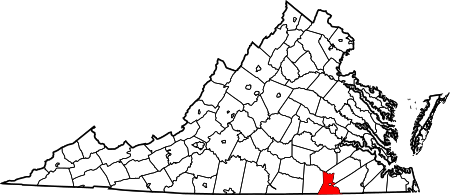
Greensville County, Virginia

Earlier, in 1742, William's grandfather, Thomas Jackson (1793-1751) (father of his mother Mary Jackson Rainey and our 7th great-grandfather) patented about 300 acres in what became Greensville County, which he transferred to the Wainwrights, who failed to pay quit rents on the property, as did the Jackson heirs, Peter Jackson and his sister and her husband Mary Jackson (1724-1774) and William Rainey (1725-1768), so that in 1766 Mary's and Peter's brother Ralph made suit and obtained the right to the property, which he assigned to his nephew, our 5th great-grandfather, 16-year-old William Rainey. The property was re-surveyed and found to contain 312 acres rather than 300. Perhaps William sold off some of that land, but he kept at least seven slaves on a plantation of 110 acres there, even after he moved across the border to Northampton County, North Carolina, probably because that was where his bride's family the Vaughans lived. The North Carolina Provincial Congress passed a ban on importing slaves from Virginia into North Caroline in 1774, believing increasing the number of slaves in the colony would increase the number of runaways and free blacks. We'll get back to that Greensville plantation a little later.

Catherine Hall Vaughan's mother, another Catherine Hall Vaughan, our 6th great-grandmother, died shortly after her daughter's 1745 birth; her father William Vaughan (1722-1794) remarried and provided her with numerous half-siblings.

 William and Catherine had sons Hall, William, James (our 4th great-grandfather), Edmond, Thomas Hall, Daniel, Polly, Betsy Patsy, Catherine Hall, and Maria Ann, all named in William's will in that order, so we'll assume James was the third son, although at least one sister may have been older. 

Fatally ill, William prepared his will in March 1799 in Northampton County. It's an interesting Last Will & Testament, if only to show the family's lifestyle. Most men gave their wives control of their property only if they remained widows, normally indicating it be sold for the children's benefit if the widow remarried, but William didn't do that, and it would  cause trouble in the future. He left his personal and real property to Catherine, which included the 110 acres in Greensville, Virginia, and the seven slaves Cherry, Betty, Violet, Ellick, Lilly, Harry and Serena.  Northampton County was becoming a race horse breeding area, home to the famous stud Archie, ancestor of Man o' War. William left Catherine two horses, a gray and a sorrel, nine head of cattle and twenty head of hogs. He designated that she obtain for the three youngest sons, Edmond, Thomas Hall, and Daniel, each a horse when they reached the age of twenty. Because James was not included, we can assume he was already age twenty or older, which would put his date of birth at 1775 or earlier. 

The household items were nothing of value: four beds and furniture (bedding); two tables; seven chairs; one riding chair and harness; four iron pots; a kettle; a Dutch oven; three pewter dishes; eight plates; three basins; six spoons; six earthen dishes; 18 earthen plates; two teapots; one tea kettle; three earthen bowls; small quantity cups and saucers; one ox cart; five plow hoes; five weeding hoes; three hilling hoes; two grubbing hoes; two chests.

When the youngest son Daniel reached twenty years, William's will decreed that "the whole of my estate after the sons having had their horses, to be equally divided among my wife Catherine and all my surviving children" in "equal proportions." He then listed the ten children. He named Catherine and his son William executors. William's will was probated at the 1799 December court of Northampton County.

William Rainey's actual signature on his 1799 will, spelling it Raney. When the clerk copied it into the county Will Book, he changed the spelling to Rainey.
 The following spring our 4th great-grandfather, James Rainey, traveled up to Albemarle Parish, Sussex County, Virginia, where his father William had been born 50 years earlier, perhaps where he also had been born, and married Martha Parham on 3 April 1800. As a third son he had little to offer. Many of his siblings were still children - his sister Maria Ann born just before his father's death - so there was little chance of the plantation and slaves in Greensville County being sold and the proceeds divided. All we know at present is that James appears on the 1810 census for Pulaski County, Kentucky, with a wife and family. I doubt he and Martha made the move alone, but for now we don't know what extended family members, if any, traveled with them to Kentucky. 

About 1811, back in Northampton County, William's widow Catherine married Benjamin Putney. She yet had minor children in her household. Her son, Thomas Hall Rainey, was an ambitious man, who had married in February 1808 Elizabeth Gray, daughter of a wealthy plantation owner. Family myth says that after her father forbade the marriage, they eloped over the frozen Roanoke River, no doubt on a fine horse. It appears he feared his new stepfather was up to no good regarding the plantation in Greensville County, so he entered his mother's house and carried off the paperwork in the form of bonds, which were required in any sale of that property. Benjamin Putney and his mother sued him for the return of the paperwork, which Thomas claimed in a deposition, after swearing on the "Holy Evangelists" (the New Testament), he'd taken to protect the rights of his brothers and sisters and his own claim on his father's estate. Eventually the suit was settled and he returned the papers. Thomas Hall Rainey owned a mill for wheat and possessed slaves to work his cotton fields. He also was a money lender as some wealthy men were, banking not trusted by many. After a long illness - his doctors' bills were enormous for the time, running into the hundreds of dollars - he died in 1826, leaving his estate in trust for a son and three daughters, with  Elizabeth as guardian. Elizabeth insisted the children be sent to private boarding schools, the expenditures for which she had to report to court-appointed guardians after her own guardianship was terminated for her being a spendthrift.  And because of it we have a record of how an upper-crust daughter, such as Nancy Rainey, our fist cousin 5X removed, then about age 11, was outfitted for boarding school in 1829.

c1830 children's clothing
All clothing was handmade. Yards of various types of cloth were required: Indian cotton, cambric, calico, check cloth, flannel, muslin, dimity, linen, lace, ribbons; spools and balls of threads; bunches of pins. Other items were: a cashmere shawl; a veil; a hat and a band box; leather shoes and a finer pair of Morocco leather shoes; boots; a bandanna handkerchief and a silk handkerchief; silk gloves; three pairs of stockings and a pair of garters and belt; a fine comb [its teeth close together, likely for combing out lice nits]; 2 tortoise side combs; one strand necklace; a pair of scissors and scissors chain; a silver thimble; a belt clasp; a quire of paper; ink powder; a pen knife. The cost of board and room itself for Nancy was $40.00.
Warren County, North Carolina

Our 5th great-grandmother Catherine's husband, Benjamin Putney, died in 1825. In the 1830 census, Catherine was living at Six Pound in northern Warren County, North Carolina, next door to her daughter, Catherine Rainey Riggan. In fact, three of William and Catherine's daughters married Riggan brothers.  Catherine died in 1836. If our James's last brother Daniel was born in 1793, he would have reach age 20 in 1813, received his horse, and then the Greensville County plantation and slaves would have been sold, and the profits dispersed to all ten children. Did our James get his share? And how would he get it in Pulaski County, Kentucky?

 W-e-l-l, via the U.S. Postal Service, of course. No rural delivery was yet available, but there was a post office at a home or a store by 1803 in Somerset, James' nearest town. No postal money orders were available until the Civil War, but monies could be sent through the mail. 

Below is a video "Save Our Post Office" produced by People for the America Way, the song sung back in 1958 by Alabama shape note singers, a very old manner of singing in America. 

As of June 2020, 671 high-volume mail processing machines were ordered removed from sorting facilities across the U.S.

Be aware. The United States Postal Service is enshrined in the Constitution as a core priority of the federal government because it provides an irreplaceable service. It’s part of the lifeblood of our communities. By making sure that all Americans, regardless of where they live, can be in contact with one another, the Postal Service knits together the fabric of our community. It unites all of us.

With startling reports that the USPS is cutting back on services because they are stretched for revenues, we simply can’t afford for the USPS’s role to be diminished, particularly as we become even more reliant on meeting our needs in this time of the COVID-19 crisis.