Tuesday, June 4, 2019

8th Great-grandfather John Sturdivant & Bacon's Rebellion 1676

Artist Howard Pyles' illustration of the Burning of Jamestown during Bacon's Rebellion, 1676


Our ascent to John Sturdivant (1630-killed 1684), our 8th great-grandfather is: our grandfather, Frank Whitman Raney (1888-1969), married Mary Emma Smith, 1910, Fredonia, KS; great-grandfather, James Samuel Raney (1868-1954), married Nancy Ann Dyson, 1887, Indiana; 2nd great-grandfather; Everett Rainey/Raney (1844-1899), married Nancy Jane Dougan, 1865, Warrick Co., IN; 3rd great-grandfather, James Rainey (1814 - c1868/70) married Milla "Millie" Roberts, 1832, Pulaski Co., KY; 4th great-grandfather James Rainey (c1774 Northampton Co.,NC - 1838/40 White Co, TN) married Martha Parham (c1784 Sussex Co., VA - 1817/20 Pulaski Co., Ky) in 1800 in Sussex County. Her parents, our 5th great-grandparents, Stith Parham (1723 VA - 1793 Sussex Co., VA) and Lucretia Sturdivant (1744 VA - bef. 1793 Sussex Co.), married in 1772. Lucretia's parents, our 6th great-grandparents, Henry Sturdivant (1706 Surry Co, VA - 1772 Sussex Co, VA) married Margaret c. 1725. (The burning of Virginia's courthouses during the American Civil War makes discovering her surname difficult.) Henry Sturdivant's parents, our 7th great-grandparents, Matthew Sturdivant (1672 Charles City Co. VA - 1728 Surry Co. VA) and Sarah Anderson (1673 Charles City Co., VA - 1726 Surry Co., VA), married in 1700. Matthew's father, the subject of this blog, John Sturdivant (c1630 England - killed in 1684 in the future Mecklenburg Co., VA) and Sarah Hallom [widow of Samuel Woodward] married c.1658, are our 8th great-grandparents.

County Nottinghamshire, England


John Sturdivant was born in England about 1630 - possibly in County Nottinghamshire, which had numerous Sturdivants who bore a coat of arms. The earliest record of John Sturdivant in Virginia Colony occurs in 1652, when he and a Christopher Robinson were granted as headrights for the transportation of 12 persons at 50 acres per person, 600 acres in Henrico County (now Chesterfield County). He must have paid for his own "adventure," arriving earlier in Virginia, because a headright of 50 acres for himself is not included. For unknown reasons, Sturdivant and Robinson (dead in 1663) did not develop this 600 acres and in 1671 their ownership patent lapsed. Sturdivant had other interests to attend to.


Charles City County, Virginia
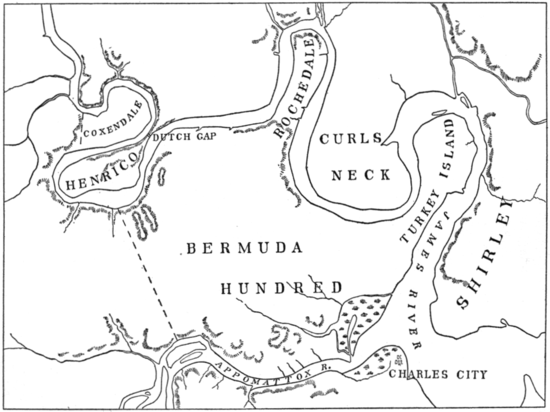
His future wife, Sarah Hallom, was born about 1632 at Neck of Land, near Turkey Island, Charles City County. Her father Robert Hallom (1598-1638), our 9th great-grandfather, arrived in Virginia aboard the Bonaventure in 1620 as an indentured servant to Luke Boyse, a tobacco grower living at Bermuda Hundred, a tobacco port on the James River.

Bermuda Hundred. Note Turkey Island


 Hallom survived the Indian Massacre of 1622, HERE, learned the tobacco business and, after his 7 year indenture, married Anne, the Widow Price, about 1630, who must have been left a decent estate for, in 1636, Hallom patented 1,000 acres on Turkey Island for paying for the transport of 20 persons.  Daughter Sarah married Samuel Woodward, who had inherited 600 acres from his father, but he died in early1658, leaving her with a son, Samuel, and his estate to administer. John Sturdivant married her shortly thereafter, giving bond and being granted quietus to manage the estate for Samuel Woodward, Jr. 

In 1663 Hercules Flood was granted a land patent, the survey of which ran on the south side of Appomattox River, beginning at the line of "Samuel Woodward," running south southeast to "John Sturdivant his lyne, which runneth to the head of Citty Creek." John and Sarah had been neighbors, so wasn't it natural they would marry and work their tobacco holdings as one household? Whether out of love or convenience, they produced five sons, including our 7th great-grandfather, Matthew Studivant (1672-1728). The name City Creek was later changed to Bull Hill Creek and runs north into the Appomattox River at the western boundary of the city of Hopewell. That part of Charles City County became part of Prince George County in 1702/03. 


In 1673, John Sturdivant and Henry Blatts patented 3,528 acres on the south side of the Appomattox River for the transport of 71 persons. Originally called Second Swamp, the area is now referred to as the Blackwater District of Prince George County. Sturdivant was becoming a wealthy man - land rich, anyway.

When Sarah's first husband Samuel Woodward sold off 450 acres of his 600 acre inheritance in 1650, Sarah's dower right to her share of the land apparently wasn't clarified; in 1673, as a result of a lawsuit, the court decreed Sarah's dower portion, by marriage now belonging to John Sturdivant, as 200 acres to be surveyed before the current owner of the 400 acres was allowed to have his land surveyed. Legal problems in Virginia Colony mostly involved land, runaway indentured servants, and tobacco, treated as currency . . . until Bacon's Rebellion in 1676, in which John Sturdivant became a participant, nearly losing his life at the end of a rope.
 
Nathaniel Bacon threatening to shoot Governor Berkeley until Berkeley bared his chest and dared him.

The best account I've read about Bacon's Rebellion is HERE. Read some of the tabs, also. Keep in mind that Nathaniel Bacon, only a recent arrival to Virginia, was first cousin to Governor Berkeley's wife Frances. I'll hazard a reason why our ancestor John Sturdivant involved himself on the side of the rebellion. Perhaps every man had to choose a side that year of 1676, just as their descendants did a hundred years later. The Sturdivants were close neighbors of Bacon, living on what was then the western frontier of Virginia Colony. Fearful of Indian attack, they brooded that they weren't being adequately protected. They had a poor growing year, with drought, a hurricane and flooding, but taxes remained high, paid by large hogsheads of tobacco. We don't know how much tobacco Sturdivant was actually growing, but we know its price had declined.We don't know if he participated in raids on Indian villages and manor houses, or if he was present at the burning of Jamestown, but he must have had a leadership role, for he was exempted from a pardon in a proclamation of Sir William Berkeley of Feb. 10, 1676/7 (the New Year began in March), which was revoked by the King's Commissioners, thereby saving our ancestor from being hanged. A grievance was written by certain landowners in Charles City County (which they gave to commissioners sent by King Charles II to investigate the late rebellion), in which they asked the King's pardon, explained the circumstances of the rebellion and pointed damning fingers at Governor Berkeley and Colonel Edward Hill. John Sturdivant was twice mentioned: 
That the s'd Edward Hill covetously minding to enrich himself by the ruin of divers of us His Mats'y's subjects, hath endeavoured most arrogantly to smother, conceal and invallid his Ma'ty late gracious proclamation of pardon, & by menaces and threats extorted divers compositions & Rewards from divers of us (not to inform against them as he said and to procure their pardon) namely from John Tate, Nevett (or Nerrett) Wheeler, John Harrison, John Sturdivant, Thomas Milton, Sara Weekes, John Baxter and his wife, John Higgledy and others although he well knew the s'd persons and every of them were not only absolutely pardoned by the King's proclamation as afore"' but also by Sr Wm. Berkeley's proclamation likewise, and the better to effect this his design causeth one of his creatures or under officer to threaten some with imprisonment but for reading the King's proclamation aforesd which was sent from Swan's Point. And the more to terrify and affrighten his s'd Ma'y subjects unto such composition with him as afore' by the harms done to others in the like case, he the sd Edwd Hill by his interest and prevallency with the s'd Sr William Berkeley procures warrants to be to him directed from the s'd Sr Wm. Berkeley for the seizing and securing ye persons and estates of divers in this county that had (and that he knew had) layd hold off and were pardoned by the Governn't, and the King's proclamations as aforesd, as namely of Thomas Blayton, Robert Jones, Anthony Haviland, Francis Weeks, John Sturdivant and Nevett Wheeler, the two last of which by composition he released or procured their discharge . . .

If you are curious about this historical document, you can read "Charles City County Grievances 1676" in Vol. 3, No. 2, (1895) Virginia Magazine of History and Biography HERE

Colonel Edward Hill was Governor Berkeley's main supporter in Charles City County, ordered by Berkeley to seize men, among them Sturdivant, and secure their property. In response to the Grievances claiming Hill had extorted bribes from them to plead their cause with the government, Hill defended himself vociferously before the Commission sent by Charles II, particularly singling out John Sturdivant, saying Sturdivant should be made to swear that he had "been out to gratify my wife for [her] begging for his life" and that he had "made an offer of I know not what" and that he had voluntarily given Hill 5 hogsheads of tobacco out of gratitude.  

As for Colonel Edward Hill, of "Shirley," (I637-1700), a 2nd generation Virginian, he was never punished for his alleged corruption before and during the rebellion, but received more honors. Before the rebellion he was commander-in-chief of Charles City and Surry counties and tax collector of the Upper James River. After the rebellion he became Attorney-General (appointed by Governor Chicheley September 27th, I679), member of the Council, treasurer, Speaker of the House of Burgesses in I691, and was appointed in 1697 Judge of the Admiralty Court for Virginia and North Carolina. 

Sarah Hallom Sturdivant, along with her two sisters, inherited from their mother Ann Hallom (our 9th great-grandmother) the 1,000 acre tract of land at Turkey Island, Henrico County [see map of Bermuda Hundred above], that their mother had maintained as a life estate. In 1680, she and John Sturdivant executed a deed for Sarah's 1/3 undivided portion of that land to Sarah's son Samuel Woodward from her first marriage, probably as a substitute for the land Woodward inherited from his father that Sarah and John Sturdivant had under cultivation and were living on. Samuel, a merchant, was living in Maryland at the time and simultaneously gave Power of Attorney to, of all people, Col. Edward Hill. Wasn't Hill still the foe of John Sturdivant? Four years only had passed. Stranger things . . . I suppose.  In 1791, Sarah's sister, Ann Hollam Gundrey, through her husband John Gundrey of Gloucester County, conveyed a 1/3 undivided interest in this Turkey Island land to Capt.William Randolph. In 1705, Samuel Woodward, then living in Boston, Massachusetts, conveyed his undivided 1/3 share of the land to the same William Randolph. Did Randolph, scion of the famous Randolph family of Curles Neck Plantation, ever acquired the last undivided 1/3 share on Turkey Island? 

Another supporter of Nathaniel Bacon was William Byrd I of Westover. He owned 1,200 acres on the James River that after his death became part of the site of modern-day Richmond. He was a fur-trader, and John Sturdivant who, as early as 1673 had received permission from the Court "to entertain Indians," began trading for him. Beaver pelts and deer skins were most desirable. 

In April 1684, John and his oldest son, also a John, born 1662, were traveling with four other men back from a successful trading venture with an Indian village in the vicinity of present Petersburg,Virginia. While on the trail through Occaneechee Town (near present Clarksville, Mecklenburg County), close to the Forks of the Dan and Roanoke rivers, they were ambushed by Indians. All were killed and their goods stolen.
Roanoke River

In a letter dated 20 Apr 1684, William Byrd I of Westover wrote from James City to Thomas Grendon of London: "Old Sturdivant, his son, Millner, Shipy, Womacke and Hugh Cassell were all killed by the Indians in their returne from the westward, about 30 miles beyond Ochanechee, what prejudice it is to mee you may guesse, they having made a very advantagious journey."
Mecklenburg County, Virginia (note how far south is was from Charles City County), not yet being settled by whites


Sarah must have stayed on the land until her death about 1690. Oldest son Daniel Sturdivant was appointed administrator of her estate. He and Robert Bolling (husband of our 8th great-aunt in the Stith line) gave security of 20,000 pounds of tobacco. In the 1704 tax list for Prince George County, sons Daniel Sturdivant owned 850 acres, Chichester Sturdivant owned 214 acres, and our 7th great-grandfather, Matthew Sturdivant owned a mere 150 acres. However, Matthew may have had a second line of income, for in 1693, the Charles City County court awarded him 600 pounds of tobacco for killing wolves with gunshot.


Monday, May 27, 2019

Junice Vivian Moe Raney (1916-2012)

Junice Raney greeting son Frank on his return from Vietnam
Kathleen Raney Sullivan and I had lunch last week with Claudia McCurdy Thomas, Kathleen's 3rd cousin, granddaughter of Anna Larson Noland, Junice Raney's aunt and sister to Junice's mother Ruby. It was delightful observing Kathleen and Claudia becoming reacquainted. Naturally I forgot to take a photo. During lunch Kathleen presented me with a treasure - her mother Junice's handwritten memoir, undated, but set down toward the end of her long and productive life. Here is Junice's perception of her life, perhaps not what we'd expect from the warm and gracious woman with a wonderful chortle of a laugh and a ready smile for everyone.

Maple Creek, Saskatchewan, Canada

I was born in Maple Creek, Sask., Canada, Aug. 28th, 1916, of parents Oscar & Ruby Moe. I lived there until I was about 5 1/2. When I was 5, Lord & Lady [Byng] came from England and I was chosen with another little girl to present flowers to them. The other girl had beautiful curly hair and mine was so straight. I don't know why that is so vivid in my mind. [Lord Byng was appointed Governor General of Canada in 1921. He and Lady Byng toured the provinces that year.]
Junice, possibly brother Jack and perhaps cousins

My dad was a great carpenter, as I heard he invented the spiral staircase, but he didn't like working, so he was like a rum-runner (my mother [and he] traveled to the U.S. to sell booze) . . . [Prohibition in the U.S. 1920 through 1933.]
Medicine Hat, Alberta, Canada
My family moved to Medicine Hat, Alberta, and Dad and Mother left my brother Jack and me home alone (my brother was two years older) while they went to the States with smuggled booze. We thought we would surprise them when they got home, so we were going to clean the house. As you might know it was a sloppy mess. We really got it when they got home.

While in Medicine Hat I contacted scarlet fever and had to be sent to what they call the Pest House. I went freely because my parents bought me a dozen oranges to take. Of course, the people at the Pest House took these away. When they thought I was through with scarlet fever they sent me home -- but my brother Jack and my cousins (who were visiting) all contacted the disease and they put a quarantine sign on the door. Our parents would leave us (2 cousins, my brother and myself) and go somewhere [and] the two boys went to the swimming pool to swim and, of course, gave scarlet fever to some of the other swimmers.
Junice, perhaps 9 or 10 years old
We then moved to Sunburst, Montana [near Libby], and were there for about a year, when we moved to Trail, B.C. I can't really tell you how long we were there [before] we moved to Nelson, B.C. There my dad drove [a] taxi (mostly for the whorehouse) and gambled. He would sometimes gamble for three or four days and, if he won, he would come home drunk. He would usually end up beating up my mother, but she was no saint. I caught her a few times making love to other men.

Ruby Edna Larsen Moe

My mother left with me and took me to Yakima, where she worked in the factory (fruit) and I could stamp [fruit] boxes . . . In school there I took a little French, but halfway through the year she decided to send me to her mother's in North Dakota (I guess I interfered with her social life). In N. Dakota I had to change my subjects altogether and it was hard. 

Then my mother went back to my dad and they sent for me. I thought things would be better, but they weren't. After a while my mother left my brother with my dad and she took me to Kellogg, Idaho. We lived in a dump and she entertained men. One night I had to sleep in the same bed and when I got up she wanted me to kiss this man, and I wouldn't, so she sent me back to Nelson to my dad. It was the middle of the school year and my dad wouldn't buy me my books, so I stayed in this boarding house that my brother was in and babysat two little children that lived a block away. I missed 1/2 year of school and still graduated when I was 16. How, I don't know.
Early Kellogg, Idaho
My mother married a "kook" in Kellogg and sent for me again and I graduated from Kellogg High School with honor[s]. I was asked to the Senior Prom by the president of the class and had no dress, so my mother had me wear the black lace dress (that stunk to the heavens) and old black shoes of hers. What a disaster!
Junice in her teens

While in Kellogg I met a fellow (Frank Doren) from New York [who] was in the CCC camp. He was a wonderful man and when he went back to New York, he worked at the Sherry Netherland
The Sherry-Netherland Hotel
Hotel and wrote a long letter every day. The "Kook" that my mother was married to wrote him a horrible letter about me, but Frank knew it wasn't true. I left the house then and went to stay with a woman for my room and board, so she wouldn't be alone when her husband was gone.


In the meantime, my mother left for California and married again (she married several times after that). I got a chance to go work for Ellen Olson. She owned a beauty shop and I could learn a trade (it would take two years). She was an angel and I will always thank God for her. She had one daughter, Polly, and Polly accepted me right away; and [it] became the happiest time of life so far. 

My mother sent for me again as she wanted to leave this man (she could blame it on me). In a short while I knew I wanted to be back in Kellogg with Ellen. My mother just gave me enough money to get home. The train broke down in Portland and they said we'd have to spend the night. I went to the nearest hotel and registered. I didn't know what to do, but I wired to Ellen. Then I waited, not knowing what I'd do if she didn't reply. But not Ellen - she sent double the money I asked for. I'll always remember Portland that way, so I don't particularly like it.

When I got back to Kellogg, I stayed with Ellen and finished my work in the beauty shop. In the meantime I met Denny Raney. 
Dennis P. Raney (1915-1991) attending Lewis and Clark High School in Spokane

Before that Frank had sent me a watch and wanted me to come to New York to be married. I did write to him and told him I didn't want to get married, and sent his watch back. He showed up in Kellogg, but he knew then that I only had eyes for Denny. He went to California and I often think about him and wonder if he ever got married.

In Idaho one could get a marriage license and marry the same day. Denny and Junice's marriage license and certificate, Dec 24, 1937.
Denny and I went to Saint Maries on a Christmas Eve over that road in an open roadster. It was so cold and snowy. His folks were expecting us early and it was 11 at night when we got [to Spokane]. We were married on that trip and were going to keep it a secret as Ellen didn't like him. So he stayed at his rooming house and I stayed at Ellen's. One night when I went to visit him, the landlady had brought a roommate down for him, so the secret was out. Then we got a cheap room together, and I worked at Ellen's Beauty Shop and he worked in the mines. One day I had a late appointment and had to stay to comb her out. Denny met me halfway and I had to go back and quit work (the dumbest thing I ever did) -- to work so hard to get the license and not be able to use it.

I tried so hard to have a baby, but it took quite a while, and we had a beautiful baby boy named Dennis Jack. He was voted "Baby Inland Empire" when he was a baby and that was an honor.
Dennis Jack Raney
 
Denny Raney and namesake Dennis Jack Raney, called Jackie as a child. 1946.

We moved to Spokane and stayed with Denny's folks for quite a while. 
Grandpa & Grandma Raney's home on 513 E. Nora, Spokane

Frank was born while we were there. 
 
Recent photo of Junice and Denny's longtime home on Sharp Ave., Spokane

We did then get a home of our own in the Gonzaga area for $2600 -- $500 down and $90 a month. It had an extra lot and the children did a lot of playing there.  It had people living in an apartment upstairs, so we got revenue from it. 
 
Junice

We had a little girl named Mary Jean and were so thrilled. Then we had little Geraldine. She was premature and had to be in the hospital for six weeks. One day she would gain [weight] and then she would lose [it]. The doctor finally said she might as well go home. [She was so small, they brought Gerri home in a shoebox.] I prayed every day that I would have as many children [as He wanted me to have] if God would spare her. When she got home she had to have a formula that was made 24 hours before hand. She did so well, thank God, and God gave me another girl. [Gerri and Kathleen] are a year apart. What a blessing.
Kathleen Raney and Terry Sullivan on their wedding day.

I sold Avon and took in babies to help out. I had four or five at a time. They paid me a dollar a day and that included their food.Then I took in boys from Gonzaga [University] after the people moved from the apartment upstairs. I had about six or seven. Then Father Goebel asked if I would board and room three boys from Priest River. I did that for three years. Denny and the girls and I slept on the 3rd floor and the boys [Jack and Frank] slept in a room we'd made on the side porch that was closed in.

It was around this time I had to have my cervix removed as it had a cancerous growth on it. After about six months [my periods were] so painful. The doctor examined me and put me in the hospital. My uterus had to be removed. I was young, but it had to be done. Thank God I had five healthy children.

I developed a clot on my leg, but the three boys from Priest River wouldn't be going home for two weeks, so I waited. By that time It was clotted up to the hip -- I had to go to the hospital, lie quietly with a heat tube over it for ten days. It [seemed such] a long time, as I felt well otherwise. 

Jack (our oldest boy) left after 8th grade to go to the seminary in Santa Barbara. I would never let him go if I had it to do over. That is too young for a boy to leave home. He got a wonderful education, but he missed his teenage [years] at home where he belonged.
Junice, Denny, Geraldine, Kathleen, Mary Jean, Frank, Easter c1955. Jack was at the seminary. Grandpa seldom took a good photo.

The girls all went to Holy Names and Frank went to Gonzaga [Prep]. Frank worked his tuition out and I worked at holy Names overseeing the girls in the dining room to help with their tuition.

I then got a job with Gonzaga University in one of the dorms, cleaning it. 

One night I [began] to answer a question on [a] show on television and Frank said, "You know you don't know that, Mother." That changed my whole world. I enrolled in nursing at Spokane Community College to become a licensed practical nurse and I made the Dean's List. That gave me some of my self-confidence back, and I will never regret that. I worked at Sacred Heart Hospital (and dearly loved it) until my husband lost his leg in a train accident while at work. [Denny was a brakeman for the Northern Pacific.] I quit to come home to care for him. While he was recuperating, we took a real estate test and I passed . . . but of course I never pursued [it] as I could not drive a car.
Denny & Junice, their children, spouses, and grandchildren, c1974. You know which one you are.

 
Since Terry Sullivan was the man behind the camera in the above photo, here's youngest daughter Kathleen, husband Terry Sullivan and their three sons, pictured with Kathleen and Terry's grandchildren.

When Denny passed away [1991] I sold the house [Frank and Mary Raney's house at 513 E. Nora that Denny inherited] and moved to the Cathedral Plaza. I loved it there and I became a Foster Grandmother for Head Start children. I have been with that program for more than sixteen years, and am so happy. The children are great and they make me feel like something special. I still hear from some of them that were with me years ago.


For the last year and a half I have lived at Emilie Court, which is an "assisted living" place. I have many friends here and am very happy. 

I did finally get to use my Beauty experience. I cut all the children's hair in our neighborhood for 25 cents. I had my own sterilizer and I enjoyed it. The barber on Hamilton [street] turned me in for not having a license. It was too bad, but it gave me more time for other things like sewing.


And that brings me back to the Raney's 3rd cousin Claudia and her family. 
Junice, her aunt Annie Larsen/Larson Noland (on her 90th birthday), and her first cousin Jean Noland McCurdy, Annie's daughter and Claudia's mother. Kellogg, ID, 1982.
                               Junice's Family Tree
Junice Vivian Moe Raney (1916 Maple Creek, Sask., Canada -2012 Spokane, WA).
- Father:  Oscar Benonie Moe (1889, McFarland, Dane Co, WI - 1974,Vancouver, B. C., Canada) 
- Mother: Ruby Edna Larsen (1897 Waupaca.,WI - 1991) They had son John "Jack" Bernard Moe (1914 Sask. Canada -1995 Las Vegas, NV) and Junice Vivian Moe (1916-2012). Jack came down to the U.S. in 1930 with his mother, and eventually enlisted in the U.S. Army Air Corps, serving in Hawaii. In 1938 he married in California Samette Winona Sullivan (1919 CO-1978 Boulder City, NV). He was discharged by 1940, and living in Los Angeles, where he and his wife registered as a Democrats.
-- Paternal grandfather: Herman Gaard (Olsen/Olson) Moe (1858, Norway -1912, Edmonton, Alberta, Canada) He changed his surname from Olsen/Olson to Moe to honor a man for whom he worked as a young man. However, he married Julia Harrison in 1883 in Dane Co, WI using the name Olsen/Olson.
-- Paternal grandmother: Julia Gurine Harrison (1861, WI -1931, Maple Creek, Sask., Canada)
 Herman and Julia produced children:
  • Tilina Ganelea (Olson) (1884-1957) 
  • Telena G. (1885-1957) 
  • Oscar Benonie (1889-1974) 
  • Sarah Amanda (1891-1953) 
  • Emma Susan (1893-1981) 
  • Idella Alvina (1901-1987) 
  • Adolph (1903-1912) 
  • Floyd H. (1905-1986) 
Junice's maternal grandparents, Andrew Martin Larsen/Larson, Hella "Helena" Salvorson Carlsen, mother Ruby (youngest), Aunt Anna, and Uncle Lawrence. c.1906

--Maternal grandfather:  Andrew Martin Larsen/Larson (1866 Denmark - death after 1945, probably Canada). He came to America with his father Lars Hansen/Hanson (1822 Denmark- after1900 Waupaca, WI) and mother Kristien (Kristine) (1822 Denmark - before 1900, Waupaca, WI) and appears on the 1870 census with them for Waupaca, WI. He married there in 1887. In the 1900 census, he described himself as a civil engineer. In 1910 he worked at a steam engine factory in Waupaca. He moved his family to Moosejaw, Saskatchewan, Canada in 1911 and they appear on the 1911 Canadian census there.
Waupaca County, Wisconsin
-- Maternal grandmother: Hella "Helena" sometimes "Ellen" Salvorson Carlsen (1866 Norway-death after 1945, probably Canada). She arrived in Wisconsin from Norway in 1885 (most likely with her family), and married Andrew Martin Larsen/Larson in 1887. She gave birth to Lawrence Christian (1890 Waupaca, WI -1972 Ventua, CA) (Lawrence returned to the U.S. from Canada, probably after Canada's entry in World War I, and married in Iowa in 1917); Anna Linda (1892 Waupaca, WI-1987 Kellogg, ID); Ruby Edna (1897 Waupaca, WI -1991) and Marian (1900 - died in infancy). 
1901: Junice's maternal grandmother Hella "Helena" Carlsen/Carlson Larsen/Larson w/ baby Marian, who died in infancy
c1905 - Ruby's older sister, Anna Linda Larsen/Larson, age 13
Ruby's sister, Anna "Annie" Larsen/Larson, was single in 1911 on the Moosejaw, Sask. census, then married Glenwood W. Noland (1888 KS -1963 MT) in 1915 in Sask. and had children Jenny "Jean" Helen (1914 Canada -2005) and Clifford Lloyd "Laddie" (1916 Canada -1967 U.S.). Annie and Glenn moved to Maple Creek, Sask., by 1921, but repatriated to Kellogg, ID by 1926.  It was Jean's daughter Claudia Noland Thomas we had lunch with.
Junice's 1st cousin and Anna's daughter, Jean Noland McCurdy (1914-2005)
--- Paternal great-grandfather: Ole Syverson (1815, Hedmark, Norway - 1888, Sel, Oppland, Norway), Father of Herman Gaard Olsen Moe.
---Paternal great-grandmother: Gunhild Thomasdatter (1820, Norway-1886, Sigdal, Buskerud, Norway), mother of Herman Gaard Olsen Moe.
--- Paternal great-grandfather: Assov/Oosff Haraldsen/Harrison (1832, Øverland, Telemark, Norway - 1904, Veteran's Home, Lisbon, Ransom Co., North Dakota). Assov married Margith Olsdatter in 1858 in Grungedal Parish, Vinje, Telemark, Norway. Records indicate he and his wife arrived in Wisconsin in 1863 from Norway, but that would mean daughter Julia was born in 1861 in Norway and Assov claimed on censuses that she was born in Wisconsin. The Cunard and White Star shipping lines had a monopoly on carrying Scandinavians to the Midwest, via England and then to Montreal, Canada. From Montreal they would go up the St. Lawrence and through the Great Lakes to their destinations. Whatever the date of their arrival, the Civil War was raging and Assov was drafted into or volunteered for the Union Army, serving most of 1865 with the 49th Regiment, Wisconsin Infantry. HERE   He was a farmer, and by the 1880s the family was living in Cass County, North Dakota Territory. After his wife's death, he married Leanna in 1890, also a Norwegian, and they had son Osker Harrison in 1892. They were living in Ransom Co., North Dakota in 1900. He died in the Veteran's Home there in 1904.
--- Paternal great-grandmother:  Margith (Mary) Olsdatter (1837, Hjartdal, Telemark, Norway -1880-89, Cass Co., ND). She bore her husband nine children.
  • Julia (1861-1931) 
  • Anne (1863-) 
  • Rhoda Harrison (1865-1908) 
  • Ole (1865-) 
  • Rhoda (1866-) 
  • Henry (1868-) 
  • Martha (1870-) 
  • Harry (1874-) 
  • Joseph (1877-1926) 
Circa 1892 - Andrew Larsen/Larson, Hella (Helena), Lawrence Christian Larsen, and Anna Linda. (Ruby not yet born) The older woman is Hella's mother, but we don't know her name. She was Junice's great-grandmother, who immigrated from Norway.

If you wish to contribute anecdotal memories of Junice, try leaving a comment, or send them to me at shipscatbooks@jrcda.com and I will post them below.

NOTE.: Junice's descendants share at least one Norwegian DNA line with the descendants of Grace Bernhardt Raney, wife of Denny Raney's brother Paul, through her Norwegian ancestors. It really is a small world.


Saturday, May 11, 2019

Francis Eppes - Jamestown Adventurer -10th Great-grandfather

WPA mural painted in 1939 by Edmund M. Archer in the Hopewell, Virginia, Post Office, titled: "Capt. Francis Eppes Making Friends with the Appomattox Indians."


 [10/26/20. I am wrong re our lineage into the Eppes family. It isn't through Roger Rainey. I've yet to find why our family has so many Eppes DNA matches. When I discover which wife was an Eppes, I'll change this blog. KC)

Francis Epes (later spelling Eppes ) and his wife Marie, our 10th great-grandparents, were not our earliest ancestors to set foot on American soil when they arrived in Jamestown, Virginia, before 1623, but they were nearly so. Virginia, still under the charter of the London Company of Virginia and not yet a royal colony, was founded in 1607 by adventurers hoping to find gold. When Francis and Marie arrived with his brothers William and Peter by 1623, it was in the midst of serious efforts to establish a permanent settlement, for the Native Americans had no wealth but land. I have often wondered why in high school we spent weeks studying the Pilgrim fathers up in Plymouth Colony, but gave short shrift to the cavaliers of Virginia.

Ashford, Kent, England
Francis Epes was born c.1597 in Ashford, County Kent, England (about 65 miles southeast of London and not far from Canterbury) and died in Virginia by 30 Sept. 1674. He was the son of John Epes the Elder (b.1550), a gentleman of Ashford, and Thomasine Fisher (our 11th great-grandparents. Baptized 14 May, 1597 in the parish church of Ashford, his lineage can be traced back to thirteenth century Kent. William, Francis, and Peter were the 5th, 6th, & 8th sons (10th, 11th, & 14th children) of John Epes. Captain William Epes, the older brother, moved with his wife Margaret from Virginia to St. Christopher's in the West Indies by 1630 and Peter left no descendants of record in the colony; and this is why I have no hesitation in naming Francis as our direct Eppes ancestor.
 
St. Mary the Virgin, Ashford, Kent, England, where Francis Epes was baptized and probably married.

Francis Epes married Marie (1602-c1644 or later) in England in 1620. She was probably a Kentish maid.

Imagining Jamestown c1614
In April 1625 Francis Epes was elected from Shirley Hundred to sit in the Assembly of James City in May of that year, when he began a career of public service. He gained patents to huge tracts of land in the Virginia Colony.
  • He was an active officer (in grades Ensign through Colonel) in the Virginia Colonial Militia.
  • He was appointed commissioner for the Upper Parts, 8 Aug. 1626, and commander of forces with Capt. Thomas Pawlett to attack the Weyanoke and Appomattox Indians 4 July 1627.
  • In 1627 Francis was a member of the House of Burgesses for Shirley Hundred, Mr. Farrar's and Chaplaine's, 1631-32, and for Charles City County, 1639, as one of four persons "resident in Virginia and fit to be called to the Council there."
  • He was appointed to the "Commission for a monthly Court in the Upper Parts," in March 1628.
  • He served in the House of Burgesses for Charles City County, 1639/40 and 1645-46, and was a member of the Council in 1652.
Francis returned to England c.1629, taking Marie and two small sons, John and Francis II, with him, either to tend to the affairs of his father John Epes, recently deceased (but there were other sons); or to collect an inheritance (one would think his and his brothers' inheritances were distributed when they equipped themselves for their first voyage); or being an ambitious man, he went to arrange to increase his fortune in the New World.  Francis' third son Thomas was born in London and baptized there at St. Olave's, which later survived the Great London Fire of 1666.


St. Olave's in London is also where Samuel Pepys is buried
Francis Epes returned to Virginia by 1632 on the Hopewell, and claimed headrights for himself (it was legal to claim 50 acres for each voyage), his sons, and 30 new colonists, indentured servants, and 5 Negro women identified only by first names, probably acquired as slaves at a stop in the Caribbean, whose passages he paid. 34 persons x 50 acres = 1700 acres. He claimed his wife's headright of 50 acres at a later date. Francis expanded his land holdings in the New World at every opportunity.
Charles City County, Viginia
  • In 26 Aug 1635, as Capt. Francis Epes, he was granted that 1700 acres in Charles City County on the Appomattox River at its confluence with the James River, which he named Hopewell Farms (now the modern town of Hopewell, Virginia). A portion of that property remained in the Eppes family until 1978, the longest held property by a single family line. It was acquired by the National Park Service in 1979 to extend the Petersburg National Battlefield site from the Civil War.
  • He also held land on Shirley Hundred Island, now Eppes Island, and maintained his principle residence there.
  • In 1653 he received another grant of 280 acres adjoining the larger grant in Charles City County for transporting 6 persons.
    Epes owned property first at Shirley Hundred, adding to his holdings with 1700 acres across the James at present-day Hopewell, where the Appomatox River empties into the James.
Back to the Hopewell Post Office mural. An unknown author wrote the following:


In the mural design that Archer submitted to the U.S. Treasury Department in 1939, he portrayed  Captain Francis Eppes shaking hands with the chief of the Appomattox Indians in a friendly, cooperative manner. The mural depicts the arrival of Eppes on his ship the Hopewell, seen in the left background, for which his farm and the surrounding city were later named.  Founded in 1635, Appomattox Manor is considered the oldest English Colonial Land Grant in the United States to continue in the same family. The work continued a long tradition of romanticizing first encounters between Europeans and indigenous peoples. Growing up in Virginia, Archer most likely had some familiarity with the tale of Eppes' arrival that he sought to illustrate in the painting. However, the story conveyed in the mural hid the tense intercultural relations between the early English settlers of Virginia and the indigenous Americans, thus replacing the historical testimonies of immense bloodshed with the naïve façade of a gentleman’s agreement. . . .

This year [1635] marks both Eppes’ assured prominence in Charles County henceforth because of the recognition England gave to his ownership of that land [of 1700 acres], and a turning point for the Appomattox Indians who continued to defend their claims. 

The Appomattox were an Algonquin-speaking tribe and part of the original five tribes of the Powhatan Confederacy. According to John Smith, an early explorer and documenter of the Chesapeake region, the Appomattox had 60 warriors in 1607. By 1616, that number doubled to 120. However, their numbers significantly dwindled in the coming decades, and the tribe was considered extinct by 1722. Their early encounters with colonists had been peaceful until 1613 when Sir Thomas Dale pushed the tribe away from the mouth of the Appomattox River in order to create the town of City Point.

Archer’s mural illustrates an agreement with the local Appomattox to share the land at City Point, the land in Charles County that Eppes had received from England and that later became the city of Hopewell. Yet in actuality, the natives had no involvement in the official proceedings that granted land to colonists. The illustration offers a blissful illusion of mutual satisfaction when, in fact, the English Colonists and Native tribes in the Chesapeake region had been waging a series of wars known as the Anglo-Powhatan Wars for two decades prior to the land grant of 1635.

The Anglo-Powhatan Wars originated from early contentions with the English colonists who settled in Jamestown. The first conflict occurred in 1609 and lasted until 1614 with the marriage between John Rolfe and Pocahontas, leaving the colonists and Powhatan Confederacy on an uneasy footing. These early attacks sowed the seeds for the later Virginia frontier conflicts that began with the Indian Massacre of 1622, an organized Indian raid on English colonists that killed a third of the colony’s population; continued during the resulting prolonged periods of war in 1622–1632, 1644–1646, and 1675–1677, and ended with the Treaty of Middle Plantation in 1677, in which the natives swore fidelity to the English Empire. Agreements between the Indians and the colonists were saturated with distrust and cultural misunderstanding amid the strains of this era. Archer was ignorant of this tense period of conflict that he idealized as a time of cordial agreement between the colonists and Powhatan Indians.

Eppes’ relations with the indigenous populations were no better than those of the typical colonist. The relationship between Francis Eppes and the Appomattox could not be described as friendly in the aftermath of the warring period between 1622 and 1632. Eppes’ return to North America in 1631 was not his first encounter with the native populations of the Chesapeake. In 1627, he had led an assault against the Weyanokes and the Appomattox. Thus, the image of Eppes “making friends” with the Appomattox seems highly unlikely in the wake of warfare and the appropriation of lands by the English and colonial governments without Native consent.

What was it that made Francis Epes a wealthy landholder? Why, tobacco, of course.


Tobacco harvesting

You may be wondering which of Francis' sons is our direct ancestor. It is Francis Eppes II (1627 Virginia - 1678 Henrico Co. VA), our 9th great-grandfather, who married Mary Wells (1623-1660). But that's another story. Eventually, in 1720 a Sarah Eppes married Roger Rainey, to become our 7th great-grandparents, bringing the Rainey and Eppes lines together.


Thursday, April 18, 2019

South of the Blackwater: Our 4th Great-grandmother Martha Parham

 
Blackwater River in southern Virginia

Assembling our Raney/Rainey family line, whose roots lie deep in Virginia soil, is analogous to piecing together a large jigsaw puzzle. First you piece the frame. I created a family tree of all the early Virginian Raineys I could locate, knowing only that we were descended most likely from the immigrant William Ranye (c1666 Ulster-1722 Virginia). We knew our family had come out of Tidewater Virginia because Pat Raney's yDNA test in 2007 informed us the descendants of those Raineys were our closest Rainey kin. I hoped the pieces of our Rainey ascent would easily fall into place, but they didn't. As I've sometimes done with a puzzle, I tried forcing in a piece I thought should fit - trying to connect our 3rd great-grandfather James to selected Rainey/Raney men as possible fathers. As we know, the more complete the puzzle, the easier to find and place the pieces. I might have reached that tipping point.


Blackwater Swamp. Lots of swamps in Sussex County
When I contemplate our 4th great-grandfather James Rainey (c1774-c1838/40) and our newly discovered 4th great-grandmother, Martha Parham (c1785- c1817/20), I'm reminded of the first verse of the theme song to the classic John Wayne movie, The Searchers.
                                        What makes a man to wander,
                                        What makes a man to roam;
                                        What makes a man leave bed and board
                                        And turn his back on home? 
Followed by a mournful, Ride away . . . ride away . . . ride a-wa-y.
Sussex County, Virginia, formed in 1754


Our 4th great-grandfather James Rainey (c1774-1838/40), likely born in Sussex County, but reared across the line in Northampton County, North Carolina, traveled back to Sussex County to marry Martha Parham  on 3 April of 1800. James' oldest daughter, Mary "Polly" Rainey Davidson, in her 1850 Pulaski County, Kentucky census, claimed to have been born in 1800 in Virginia (that date easier to recall than her likely birth of 1801). Her brother William Rainey (1805-1885), of whom I wrote last month, was mostly consistent on censuses in placing his birth in North Carolina. It may be that this young Rainey family spent a few years in North Carolina before appearing on the 1810 census in Pulaski County, Kentucky, where our 3rd great-grandfather James Rainey was born in 1814. Rainey cousins had migrated south into the Carolinas and Georgia by 1800.

Pulaski County, Kentucky


After having ten children - some still unidentified - Martha Parham Rainey died in Pulaski County, Kentucky, after the birth of John C. Rainey in 1817 and before the 1820 census, which shows no female over the age of 16-25. It would be no wonder that James Rainey remarried. There is a marriage between a James Rainey and a Polly Dunn in 1821 in Pulaski County. James' son Stephen Rainey (c1803 - unknown) married Delilia Dunn in 1825. Were the two women related? Others have claimed Polly Dunn, marrying her to a different James Raney.  James' 1830 White County, Tennessee, census indicates no additional children born to him, but has a woman aged 30-39 in his household. Too old to be Polly Rainey, who married James Davidson in 1826 and remained in Pulaski County. The last tax payment I find for the elder James in White County, Tennessee, is for 1838 when he was about 60 years old. He must have rented his farm, for it shows no owned acreage. Did he die that year or the next . . . or did he move on? He had lived in four states. Did he seek out greener pastures elsewhere?
White County, Tennessee

I did some reading online of a book titled Sussex County: A Tale of Three Centuries, published in 1942 by the Works Project Administration (WPA) for the American Guide Series. A real gem for researchers, it lists land patents from 1701, when Sussex was still part of Surry County, down the years to just before the American Revolutionary War. 
The county line dividing Surry from Sussex County is the Blackwater River

Settlement of what was to become Sussex County was prohibited throughout the 17th century, first, because the Native American tribes had been pushed south across the Blackwater River; second, in 1693 William & Mary granted 10,000 acres of that large swatch of land to William & Mary College in Williamsburg. Native American power declined rapidly after the massacre of white Virginians in 1644 and by the end of the 17th century landowners in adjoining counties cast greedy eyes on that pine-covered land, petitioning the Crown to open it for settlement; otherwise, they warned, settlers would head south into North Carolina. There must have been good tobacco-growing land there, with the Nottoway and Blackwater rivers, navigable waters, bisecting it.


After much bickering and lawsuits against illegal settlers, the land was finally surveyed and patents issued beginning in 1701. Among the initial patent holders are the surnames of men whose genes had been or would be absorbed into our Rainey line - Eppes, Wynne and Parham. Our Rainey ancestor, William Ranye, the Immigrant (1666 County Antrim, Ulster - 1722 Prince George Co., Virginia), purchased 250 acres on Racoon Swamp in 1713 (perhaps for a son, for he himself died in Prince George County). 
 
Prince George County. Note its closeness to what became Sussex County with convenient river travel on either the Blackwater or the Nottoway rivers (previous image).

Through the years descendants of these families, and other families to whom we are related, purchased more land in what would become Sussex County in 1754, after settlers complained that crossing the Blackwater River to get to the Surry courthouse for business was a hardship and petitioned for their own courthouse south of the Blackwater.
Nottaway River, Sussex County, Virginia

Our 6th great-grandfather, Henry Sturdivant (1706-1772) purchased 636 acres in 1749 and would die in Sussex County on his plantation on the south side of the Nottaway River. He and his wife Margaret (surname possibly Bolling) produced our 5th great-grandmother, Lucretia Sturdivant in 1744. After being widowed by one Parham man, she married our widowed 5th great-grandfather, Ephraim Stith Parham (1723-1793) in 1772 in Sussex County. Ephraim had purchased either 150 or 1150 acres in 1751 [possible typo on transcribed record]. It is their daughter Martha Parham who married James Rainey, our fourth great-grnadfather, in 1800.

In 1746 a William Rainey purchased 145 acres in what would become Sussex County. Was he fourth-great-grandfather James Rainey's grandfather? I don't know yet. For the tax year 1782 two Rainey men are listed in Sussex County - William Rainey and Peter Rainey (1756-1826). One of them must have been James' father. 

I have much more to tell you about Martha Parham's family lines. In the meantime listen to the theme from The Searchers, sung by Tex Ritter  HERE